
Tangipahoa Parish Parole and Probation
Louisiana DPS&C’s Division of Probation and Parole supervises two groups that reach community supervision through different routes. Parole follows incarceration. The Louisiana Committee on Parole decides discretionary parole matters, while the Division carries out community supervision. Probation ordinarily follows a court sentence and may be imposed without a state-prison stay. A person who bonds out of Tangipahoa Parish Jail is not on parole merely because the person has left custody.
The words on the official record control. Good-time parole supervision can begin when an eligible person leaves incarceration through diminution of sentence. It is still supervision, not full discharge. A court may place a person on probation after suspending all or part of a sentence. Discharge, by contrast, means DPS&C authority has ended for the sentence at issue. One person may also have more than one case, so a discharge in one matter does not resolve another custody episode.
| Point | Parole | Probation |
|---|---|---|
| How it begins | Release from incarceration under parole or good-time supervision rules | A sentence imposed by a court |
| Decision source | Committee on Parole or applicable release-by-diminution law | The sentencing court |
| Supervising agency | Louisiana DPS&C Division of Probation and Parole | Louisiana DPS&C Division of Probation and Parole when state supervision applies |
| What it proves | The person left incarceration but may still be serving the sentence | The person is subject to court-ordered supervision terms |
- Parole
- Community supervision after incarceration under a release decision or statutory route.
- Probation
- Court-ordered community supervision imposed as part of a sentence.
- Discharge
- The end of the department’s authority for the sentence identified in the record.
- Absconder
- A person whom the supervising agency alleges has failed to remain in required contact.
Verify Tangipahoa Parish Release Supervision
Start with identifiers, not a name alone. The Louisiana DPS&C imprisoned-person information page directs the public to the automated locator. Its information can include people under parole or probation community supervision, and DPS&C states that those data are updated every 24 hours. The telephone locator at 225-383-4580 accepts either the DPS&C number or the person’s name and date of birth.
A careful Tangipahoa Parish supervision check follows the status trail in order:
- Gather the full legal name, date of birth, DPS&C number if known, and the case or booking dates that identify the correct episode.
- Use the official DPS&C information route or telephone locator. Record the exact status language, access date, and any listed location or district.
- Open the Probation and Community Corrections directory to identify the office serving the stated district.
- Contact the district and ask it to confirm only the information it may disclose. Do not substitute a cached notice for the office’s current response.
- If the person instead left Tangipahoa Parish Jail on bond, check the jail movement record and the court docket. Do not recast that event as parole.
Important: Absence from the live TPSO roster does not establish parole, probation, discharge, or release to the community.
When the state channel is silent, call rather than infer. An alias, spelling difference, update lag, protected information, completed supervision, or a different custody category may explain a missing result. The full Tangipahoa Parish booking and release path is covered on the released-inmate search home page.
Note: Keep the DPS&C status label separate from a Tangipahoa Parish jail departure date because the two records answer different questions.
Tangipahoa Parish Supervision Office Details
Tangipahoa Parish is served by the Amite Probation and Parole office. The district also covers Livingston and St. Helena parishes, so the office name is more reliable than assumptions based on a mailing address. DPS&C’s published parole conditions call for reporting to Probation and Parole no later than 48 hours after release and then monthly by the fifth. Those general published terms do not replace the conditions in an individual order.
Amite Probation and Parole1209 Northwest Central Avenue
Amite, LA
985-748-2013
Serves Livingston, St. Helena, and Tangipahoa parishes
The DPS&C office directory is the source to recheck before travel or a time-sensitive call. An assigned office can change, and an office listing alone does not prove that a named person is supervised there.
The official supervision office lookup shows the statewide route used to find the responsible district.
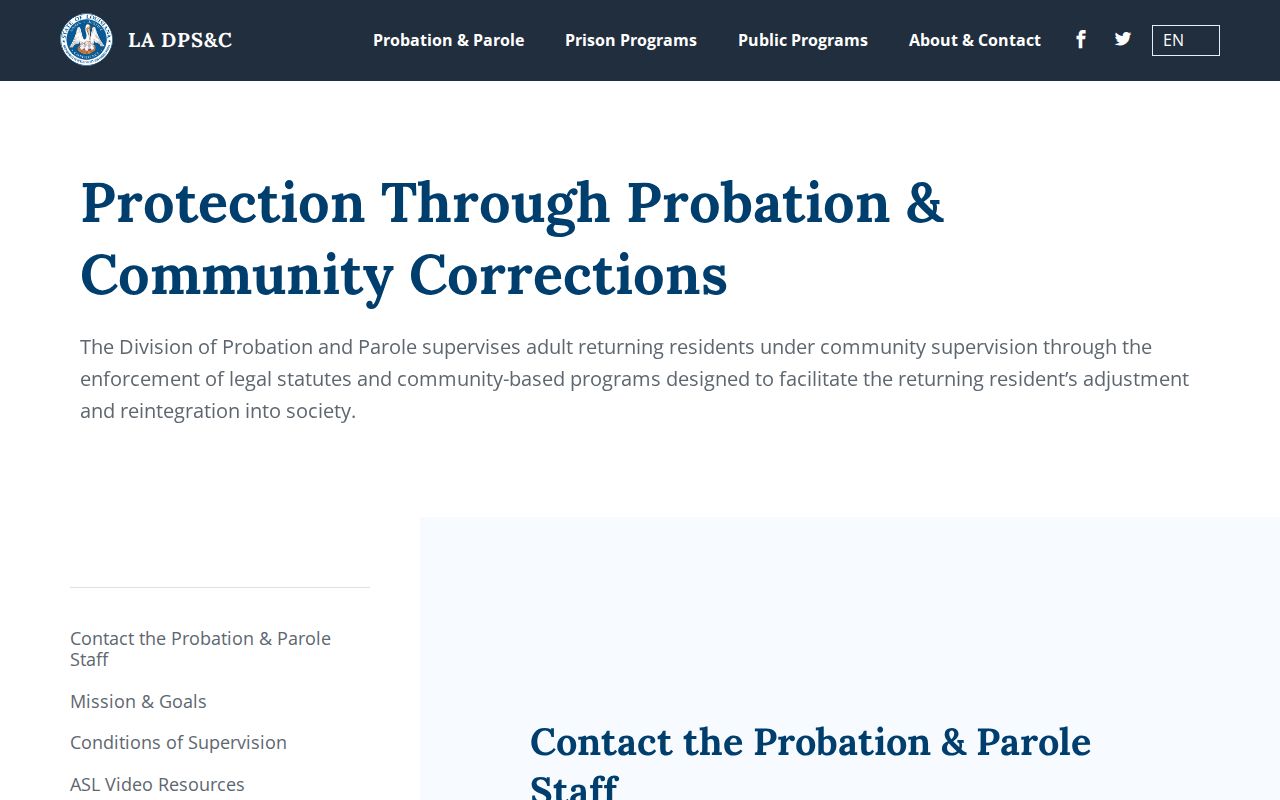
The directory should be paired with the person-specific DPS&C status rather than treated as a public list of everyone supervised in Tangipahoa Parish.
Tangipahoa Parish Parole Hearing Records
A parole hearing date is not a release date. The Louisiana Committee on Parole publishes hearing resources, while DPS&C records the later custody or supervision event. The current parole dockets group notices and agendas by hearing week. The annual schedule is useful for planning, but the current docket should control because dates can change.
The committee’s materials can document a grant, denial, reconsideration, or other recorded outcome. A grant can still require processing and conditions before a person leaves incarceration. A denial leaves the person confined unless another lawful release route applies. A revocation matter concerns supervision after an earlier release and must not be read as the first release event.
For an outcome, open the particular docket record and quote its wording. Then verify the later event through DPS&C or LAVNS. Louisiana parole eligibility is highly dependent on the offense date, sentence, statutory classification, and exceptions under R.S. 15:574.4. A hearing schedule cannot be turned into a personal release forecast.
Tangipahoa Parish Supervision Violations
Supervision conditions come from the order and the supervising agency. They may require timely reporting and compliance with other case-specific terms. A claimed violation can lead to agency action or a revocation process, but it does not by itself state the person’s original release date. The official record should identify the action, issuing authority, and current status.
An absconder notice means the agency alleges a failure to remain in required contact or is seeking the person under its authority. It is not the same as discharge. It is also not proof that a warrant remains active today. The DPS&C Most Wanted page can be checked when relevant, followed by confirmation with the issuing agency. Old posts and screenshots may remain visible after status changes.
Revocation dockets are a distinct source. DPS&C says those hearings begin at 8:30 a.m. and that the dockets are updated at noon on weekdays, subject to change. The current revocation schedule is therefore stronger than a copied calendar. Still, the docket reports a proceeding, not the final custody movement unless the record states that event.
Note: Confirm an active warrant with the issuing agency because a prior absconder or revocation notice may no longer describe current status.
Tangipahoa Transitional Work Is Custody
The Campo Lane complex creates a local source of confusion. DPS&C separately lists the Tangipahoa Transitional Work Program at 101 Campo Lane in Amite. It is a structured step before release for eligible imprisoned people, not a community release. A participant can work outside the secure setting and still remain incarcerated.
That distinction matters when a person is seen in the community or no longer appears where expected. Confirm whether DPS&C owns the sentence, whether the person is in transitional work, and whether a later state record reports parole, good-time supervision, or discharge. The program’s published phone is 985-748-3392. The DPS&C transition and reentry page explains the step-down framework.
A work assignment is not lawful release, and an unauthorized absence is not discharge. TPSO’s 2026 report about a transitional-work walk-off described arrest, rebooking, and transfer, which shows why the legal status must come from the custody record.
Tangipahoa Parish Release Identification Planning
Louisiana’s prerelease process includes a practical identity-document track. Within three years of discharge, the transition process reviews the release plan, assembles at least two forms of identification, and may replace a birth certificate or Social Security card. Within six months, an agreement with the Office of Motor Vehicles supports creation of a Louisiana identification card.
These are DPS&C prerelease measures. They should not be described as a Tangipahoa Parish Jail property-return policy. No official source in the research established the jail’s routine process for returning personal items held during confinement. TPSO’s Property and Evidence Returns page concerns seized or recovered evidence and vehicles, which is a different kind of property.
Identity preparation can help a person report to the Amite office and complete official tasks after release. It does not change the supervision start date, the conditions imposed, or the distinction between release and full discharge.
Tangipahoa Parish Supervision Discharge
Supervision ends through an official discharge or other legally recorded termination, not merely because a person stops appearing in a public interface. Under R.S. 15:574.12(G), DPS&C makes general information such as offense, conviction date, sentence length, disposition, and discharge date public on request, while much of the broader case file remains confidential.
Ask for the discharge date and the precise disposition of the sentence. If a public result still says parole or probation, the person has left incarceration but has not necessarily completed state supervision. If it says discharged, retain the access date and confirm that the result belongs to the correct person and case. A court minute, a Tangipahoa Parish Jail movement record, and the DPS&C discharge information may each be needed because they document different stages.
Louisiana LAVNS may show community-supervision data, but it is primarily a status and notification tool. A supervising-office response or a focused DPS&C public-information request carries more weight when the interface is unclear. The narrow conclusion is the sound one: identify the source, quote its status, and avoid treating “released,” “on parole,” and “discharged” as synonyms.
Note: A discharge date is stronger evidence of completed DPS&C authority than a projected date, hearing date, or old supervision notice.